Feb. 05, 2026
Agricultural amino acid refers to amino acid–based inputs used in agriculture to support plant growth, nutrient efficiency, and crop stress resistance. As modern farming increasingly focuses on sustainability and efficiency, agricultural amino acids have become a widely used component in fertilizers, foliar sprays, and soil improvement programs.
This article explains what agricultural amino acids are, their main benefits, and how they are used in agriculture, helping growers, agronomists, and agricultural professionals better understand their role in crop production.

Agricultural amino acids are organic compounds derived from protein sources and processed into forms that can be absorbed by plants. Unlike traditional fertilizers that mainly supply nutrients such as nitrogen, phosphorus, and potassium, amino acids also participate directly in plant metabolic processes.
In agriculture, amino acids are commonly used as:
Nutrient efficiency enhancers
Biostimulants
Organic nitrogen sources
Components of sustainable fertilizer systems
Agricultural amino acids are increasingly adopted because they offer both nutritional and physiological benefits to crops.
Improve nutrient absorption and utilization
Support plant metabolism and growth
Enhance tolerance to environmental stress
Promote soil biological activity
Fit well into sustainable and eco-friendly farming systems
These advantages make agricultural amino acids suitable for both conventional and sustainable agriculture.
Amino acids act as natural chelating agents, helping plants absorb nutrients such as nitrogen and micronutrients more effectively.
Amino acids are building blocks of proteins and enzymes, directly contributing to plant growth and physiological functions.
Agricultural amino acids help crops cope with stress caused by drought, salinity, temperature fluctuations, and transplant shock.
Organic amino acids stimulate beneficial microorganisms in the soil, supporting long-term soil health.
Because they are derived from organic sources, agricultural amino acids are widely used in sustainable and environmentally responsible farming practices.
Agricultural amino acids are commonly applied in:
Amino acid fertilizers
Foliar spray formulations
Water-soluble fertilizers
Soil conditioners
Organic and bio-based fertilizer products
They can be used alone or combined with other fertilizers to improve overall performance.
Agricultural amino acids are suitable for a wide range of crops, including:
Vegetables
Fruits
Field crops
Cash crops
They are often applied during key growth stages to support plant development and stress recovery.
In fertilizer formulations, agricultural amino acids serve as:
A source of organic nitrogen
A nutrient uptake enhancer
A biostimulant component
This makes them popular in modern fertilizer production, especially in products targeting higher efficiency and sustainability.
Agricultural amino acids can be applied through:
Foliar spraying
Soil application
Fertigation systems
Blending into compound fertilizers
The application method depends on crop type, growth stage, and farming practice.
Compared with traditional chemical fertilizers, agricultural amino acids offer:
Better biological availability
Additional physiological benefits
Improved soil interaction
Lower environmental impact when used properly
For this reason, they are often used as a complement to conventional fertilizers rather than a complete replacement.
Yes. When applied correctly, agricultural amino acids are safe and beneficial for crops.
Yes. Agricultural amino acids are widely used in commercial agriculture and fertilizer manufacturing.
Yes. It is commonly used in sustainable and eco-friendly farming systems.
Global agriculture faces challenges such as soil degradation, rising input costs, and environmental regulations. Agricultural amino acids address these challenges by improving nutrient efficiency, plant resilience, and soil health.
As a result, agricultural amino acids are becoming an important part of modern agricultural input systems worldwide.
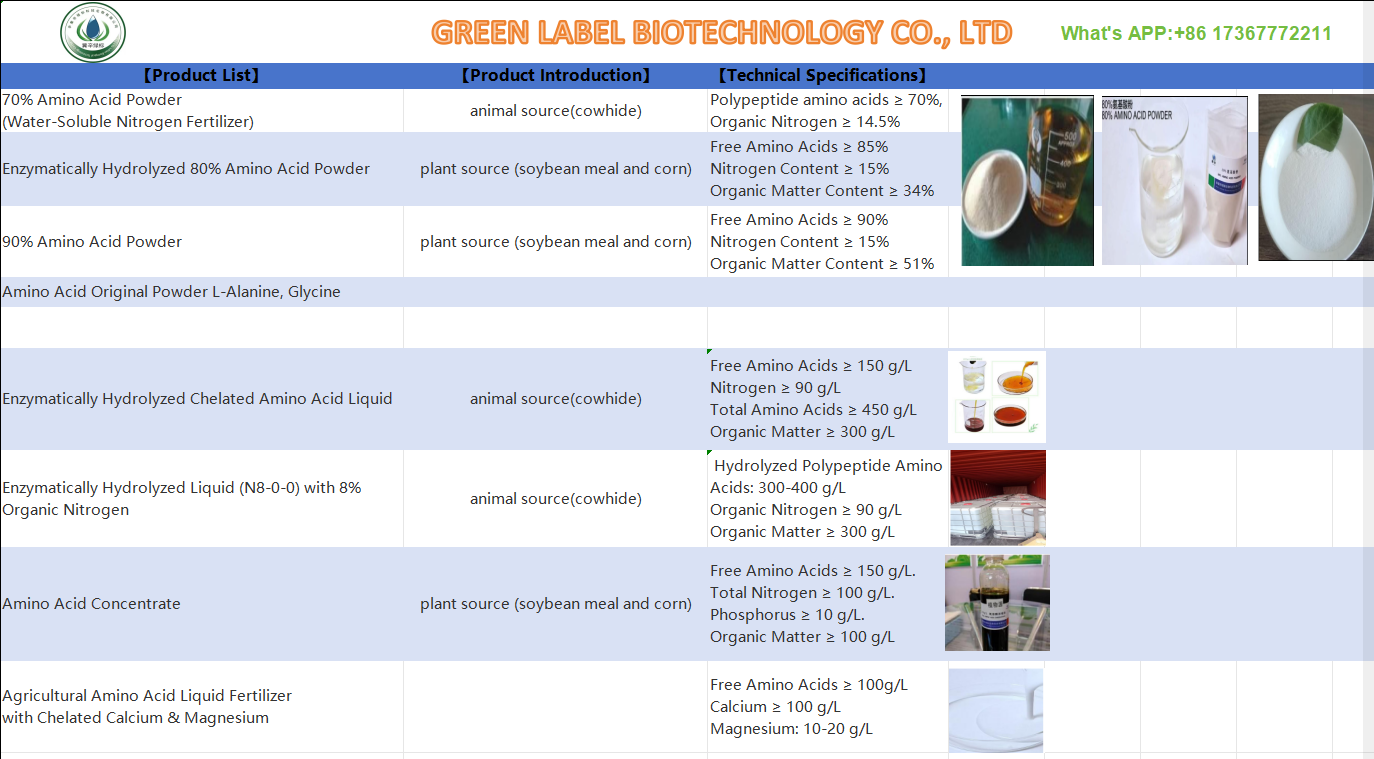
Agricultural amino acids are available in different forms and concentrations, depending on application needs and formulation requirements.
Tags: biostimulant calcium rice based functional ingredients amino liquid 30% what is liquid aminos compound amino acid powder natural organic solution amino acids how to take what is amino liquid amino acid powder liquid amino acids for plants is liquid aminos good for you soy amino acids amino acid chelated calcium amino liquid supplement soy amino acid profile liquid aminos benefits
water soluble amino acids liquid fertilizers custom manufacturing
NPK 20-20-20 Liquid Fertilizer: Balanced Nutrition for All Crops
Feb. 24, 2026
NPK Solution: Complete Guide for Agriculture, Fertigation & Hydroponics
Feb. 24, 2026
NPK Fertilizer for Vegetables: Complete Guide to Higher Yields & Better Quality
Feb. 24, 2026
Hello, welcome to submit any questions and suggestions. We will reply to you as soon as possible. Thank you for your support and help.

Our team of experienced experts can’t wait to help you find the right solution for your business, Write to us and we'll get back to you!
CONTACT US TODAY